
Sail designer
Paint your own kite.
Pick a downwind sail - spinnaker, gennaker or code sail - choose your cloth colours, click the panels. The shape you’re painting is the real thing: the gores run head-to-foot and converge at the head exactly the way we’d build them, and the outline comes from the sail’s actual mid-girth. When you like it, send it to the loft.
The sail
Panel layout
Cloth colour
Click a panel to paint it. Click it again to clear it back to white.
Your graphic
Drag the graphic on the sail to place it. It previews the way ink sits on nylon - the artwork follows the sail’s curve, squeezing toward the edges as the cloth turns away, and the panel seams run across it. White in your artwork prints as white, so it will show on a dark panel. Your file never leaves your device - the design link carries only its position, and we’ll ask for the artwork when we reply.
Quick patterns
Your design
Your enquiry includes a link that reopens exactly this design in our loft - panel for panel. Colours map to the spinnaker cloth stock range, so what you paint is what we can cut; if a shade shifts between screen and cloth, we tell you before we cut. We’ll come back with a price and honest advice on cloth weight for your boat and how you sail. Colour choice doesn’t change the price - the cloth and the size do.
Ideas to steal
What colour does on the water.
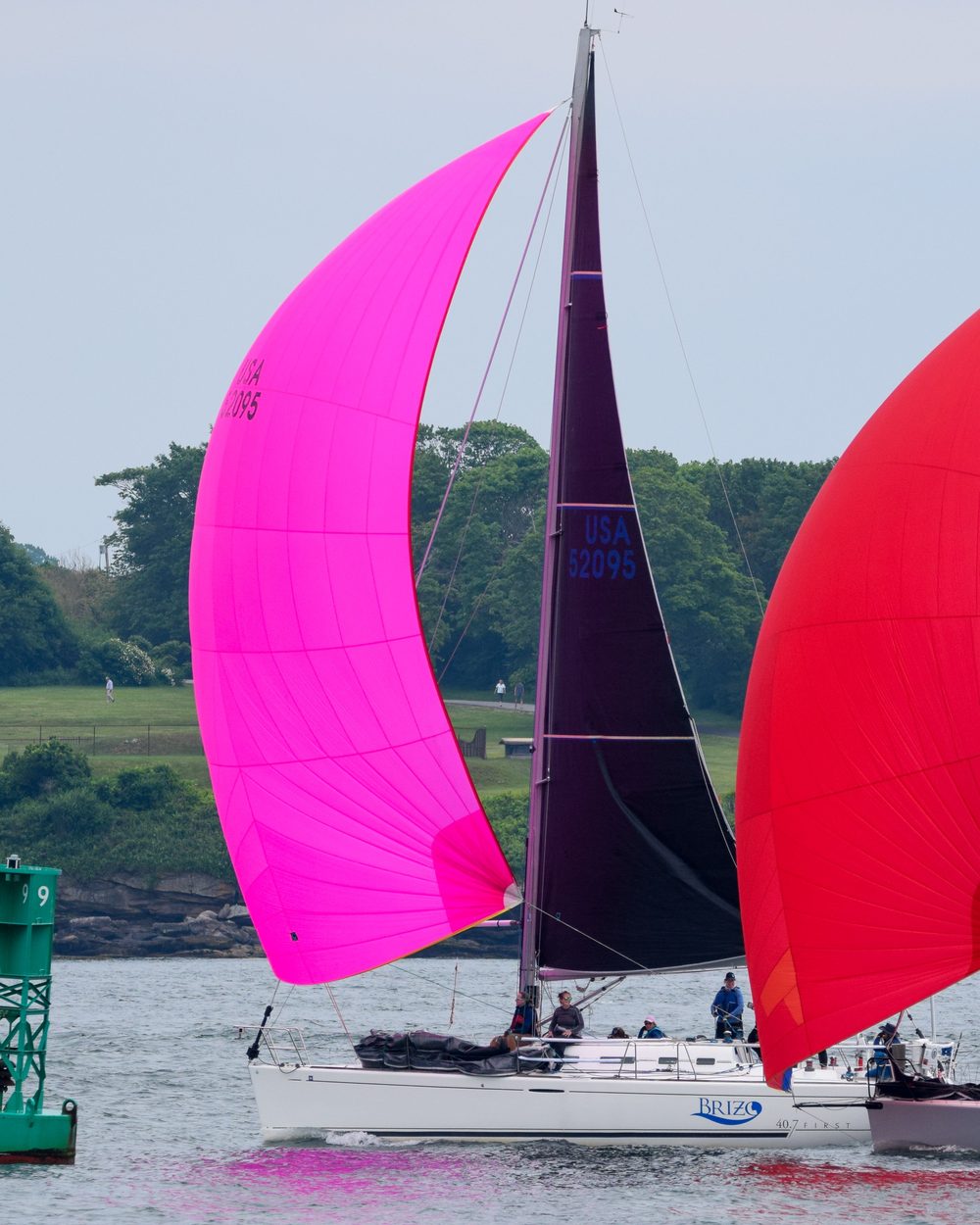
Two kites we’d happily have cut. Paint yours above - the panels you click are the panels we’d cut.

Why the shape is right
This isn’t a picture of a sail.
Every outline here is drawn from the number that actually defines a downwind sail - its mid-girth, the width at half height as a percentage of the foot. A triangle is 50%. Everything above that is bulge. Change the sail type above and watch the shape change accordingly: a Code 50 is nearly flat, a symmetric kite at 90% is a balloon. The same geometry draws every sail diagram on this site.